
Cosmetic fillings
Tooth-colored cosmetic fillings repair decay and minor fractures and close small gaps, the best known being the composite filling that the doctor places in a single session and that usually lasts 5 to 10 years. Ceramic and zirconia fillings are made in the lab and fixed at a second visit. At La Clinica in Riyadh and Khobar, the dentist chooses the material and shade after X-rays, whether the filling is for a molar or the front teeth.
Before you decide on the type of filling, learn when a filling is not enough at all, and why a front-tooth filling usually lasts longer than a molar filling.
usual life of a composite filling
for the final filling after the temporary one
no visible sign when you smile
and small gaps between teeth
What is a cosmetic filling?
A cosmetic filling is a tooth-colored material that fills the place of decay or the broken part and restores the tooth’s shape, and the doctor chooses its shade to match your teeth. It is made of composite, a mix of resin and fine glass particles that bonds to the tooth directly, or of ceramic or zirconia made in the lab to fit the tooth.
Its advantage over the silver filling
- It does not show when you smile or speak.
- Composite usually needs less healthy tooth to be removed.
Cosmetic fillings at La Clinica
When do you need a cosmetic dental filling?
Cosmetic fillings are the final step in treating small or medium tooth decay: the doctor removes the decay first then fills its place with tooth-colored material. They suit you when enough of the tooth remains to hold the filling, and the doctor decides this by examination and X-rays. They are usually suggested in these cases:
- Small or medium decay in the front or back teeth.
- A minor fracture or crack at the tip of the tooth.
- Wear on the tooth surface due to grinding.
- A small gap between two front teeth.
- An old silver filling that is broken or has decay under it, or that you want to replace with a color closer to your teeth.
When is a filling not enough?
A filling is not enough when the decay or fracture is so large that what remains of the tooth cannot bear chewing, and then the doctor suggests a lab-made filling that covers part of the tooth surface or dental restorations such as a crown. If the decay has reached the nerve, treatment begins with root canal treatment before any filling.
What types of cosmetic dental fillings are there?
There are three types of cosmetic dental fillings at La Clinica: composite, which the doctor places and shapes inside your mouth in a single session, and ceramic and zirconia, which are made in the lab and bonded at a second visit. Each type differs in lifespan, resistance to staining, the place best suited to it and the number of visits it needs:
| Criterion | Composite | Ceramic (porcelain) | Zirconia |
|---|---|---|---|
| Where it is made | Directly inside the mouth | In the lab | In the lab |
| Number of visits | One session | Two visits with a temporary filling between | Two visits with a temporary filling between |
| Approximate lifespan | 5 to 10 years | More than 15 years | 10 to 20 years or more |
| Resistance to staining | Lower, may be affected by coffee, tea and smoking | High | High |
| Best place | Front teeth and small to medium decay | Molars and large decay | Molars that bear strong pressure |
| Relative cost | Lowest | Higher | Higher |
If the decay is small or in a front tooth, composite is enough for you in one visit. If the damage is large in a back molar, a lab filling is stronger and longer-lasting.
Composite cosmetic fillings
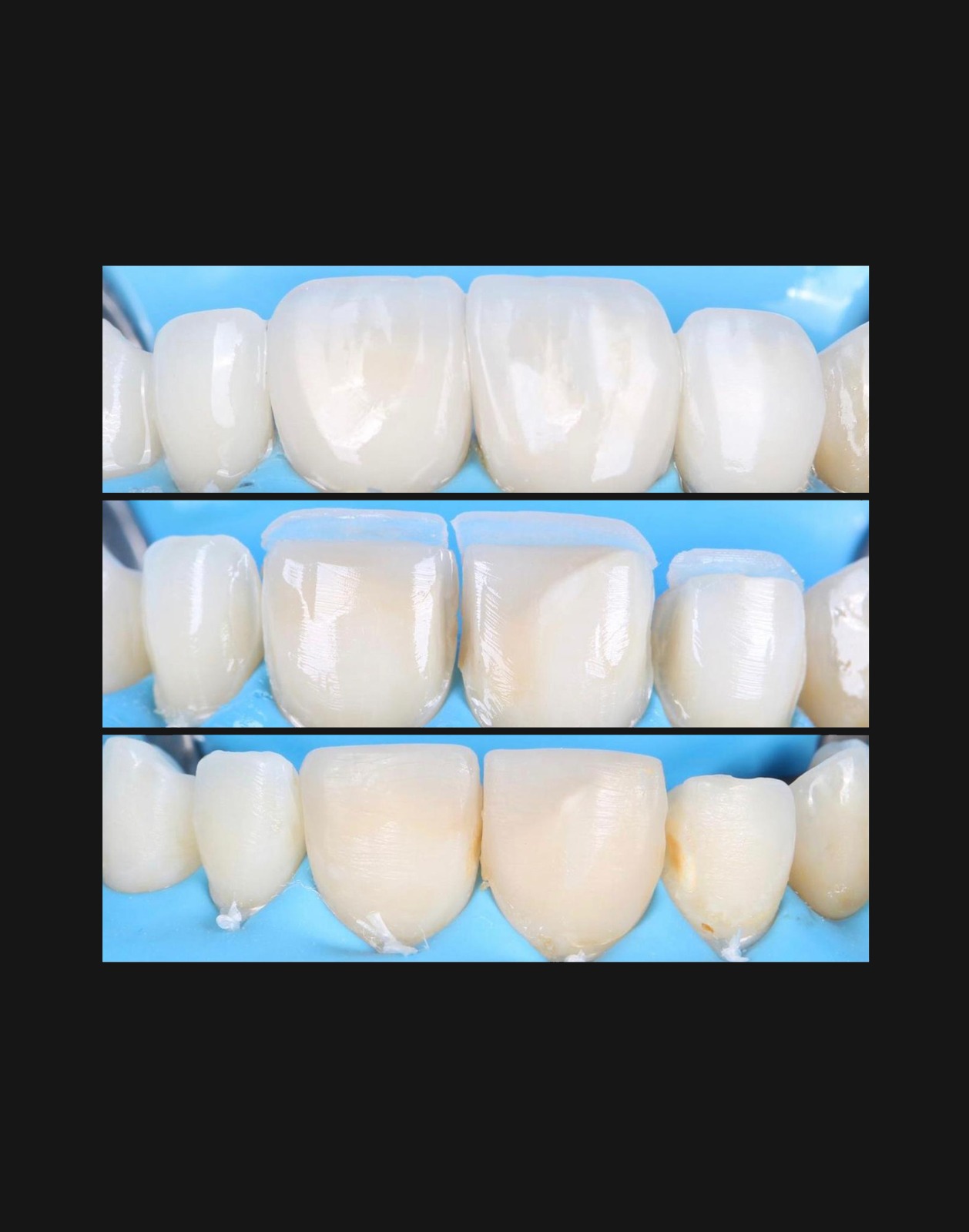
Composite cosmetic fillings are the most widely used white fillings, because the doctor places them layer by layer inside the tooth and hardens each layer with blue light, then shapes and polishes them in the same session. They suit small and medium decay and front tooth fractures, but resist staining and heavy pressure less than lab materials.
Cosmetic ceramic and zirconia fillings
Ceramic and zirconia fillings are a solid piece the lab makes to fit the tooth after it is prepared, and are known in clinics as inlays and onlays. The doctor places a temporary filling at the first visit, then bonds the final filling within 1 to 3 weeks. They are used when the decay is too large for a composite filling to bear.
Are cosmetic fillings suitable for front teeth?
Yes, cosmetic fillings are among the most used treatments for front teeth, especially composite, because the doctor matches its color and translucency to the tooth in the same session. A front tooth filling usually lasts longer than one in a molar, because front teeth bear less chewing pressure than the back molars.
3 main cases for a front tooth filling
- A fracture at the tip of the tooth.
- Decay between the front teeth.
- A small gap between two teeth.
In front teeth the doctor matches the filling color to the tooth before it dries, because a dry tooth looks lighter than its true color for minutes, so the shade is chosen at the start of the session.
What are the steps of composite and ceramic fillings?
A composite filling is done in a single session that begins with X-rays and ends with polishing, while a ceramic or zirconia filling takes two visits because the lab makes it between the appointments. In both cases the doctor uses local anesthesia when needed, so you are not expected to feel pain during the work, and you can return to your day after the session.
A composite filling goes through 5 steps in the same session:
1. Examine the tooth with the dentist using digital X-rays to determine the size of the decay.
2. Choose with the doctor the shade of the filling by comparing it with your teeth.
3. Wait for the tooth to be prepared, where the doctor removes the decay under local anesthesia.
4. Let the doctor place the composite in layers and harden each layer with blue light.
5. Test your bite after the doctor shapes and polishes the filling.
What is different in a ceramic or zirconia filling?
It differs in 3 points: the doctor takes an impression or scan of the tooth after preparing it, places a temporary filling, then bonds the final filling at the second visit and adjusts the bite.
Information about cosmetic fillings
How much does a cosmetic dental filling cost at La Clinica?
The price of a filling is decided by the doctor after the X-rays, because it changes with the type of material, the size of the decay and the number of tooth surfaces that need filling. At the consultation you learn the cost of each option suited to your tooth before you start, so you can compare composite and a lab filling knowing the difference in lifespan and price.
Dental filling prices vary according to these factors:
- The material: composite costs less than ceramic and zirconia.
- The size of the decay and the number of tooth surfaces the filling covers.
- Whether the tooth needs treatment before filling, such as root canal treatment.
- Replacing an old filling, because removing it adds time to the session.
How long do cosmetic fillings last?
A composite filling lasts at least 5 years according to Cleveland Clinic, and usually 5 to 10 years, and Cleveland Clinic estimates the life of ceramic fillings at more than 15 years. These are averages, as many small composite fillings stay intact for more than 10 years.
A filling’s life shortens with grinding, biting hard things and new decay at its edges. It lengthens when it is small, in a front tooth, and with the regular check-ups that reveal any wear or leakage at the margin before it grows.
How do you look after your filling after the session?
You look after a filling with the same habits as caring for your natural teeth, with more caution about hard foods and colored drinks, because composite may stain over time and wear under strong pressure. You may feel mild sensitivity to cold and hot for a few days after the session, and it usually fades on its own without treatment.
Keep to these habits so your filling lives longer:
- Brush your teeth twice a day with fluoride toothpaste, and floss daily.
- Do not bite ice or pens, and do not open packages with your teeth.
- Reduce coffee, tea and smoking, or rinse your mouth with water afterward.
- Ask your doctor about a night guard if you grind your teeth during sleep.
- Visit the clinic for regular check-ups, and immediately if you feel a rough edge or pain when biting.
Who are the cosmetic filling doctors at La Clinica?
Cosmetic fillings at La Clinica are carried out by 4 cosmetic and prosthetics doctors at the Riyadh and Khobar branches. Having a prosthodontist on the team helps you if the X-rays show your tooth needs a lab filling or a crown, because the plan is adjusted inside the same clinic without searching for another doctor.

Prosthetics, cavity treatment and dental fillings dentist
Why do patients choose La Clinica for cosmetic fillings?
Patients choose La Clinica because the filling plan is made by a cosmetic dentist after digital X-rays that determine the size of the decay precisely, then the doctor chooses with you the material and shade according to the tooth position, and follows up the filling with you at every regular check-up afterward. The table shows what each feature gives you:
| Feature | Benefit to you |
|---|---|
| Digital X-rays before filling | A decision based on the actual size of decay that the X-ray reveals |
| 3 materials available | A filling that suits the tooth position, the size of the damage and your budget |
| Cosmetic and prosthetics doctors in one team | Changing the plan to a lab filling or crown without referring you to another clinic |
| Local anesthesia when needed | A comfortable session with no notable pain during the work |
| Two branches in Riyadh and Khobar | An appointment at the branch nearest to you |
Do you have a broken tooth or decay you want to repair without it showing?
At the consultation the cosmetic dentist examines your tooth by X-ray, and explains the most suitable material, its cost and the number of visits before you start. Appointments are available at the Riyadh and Khobar branches.
Why do patients choose La Clinica?
Frequently asked questions about cosmetic fillings
Is a cosmetic filling painful?
Pain is not expected during filling, because the doctor numbs the tooth locally when the decay is close to the sensitive layers. After the session you may feel brief sensitivity to cold and hot for a few days, and it fades gradually, and if the pain continues or increases when biting, see the doctor to adjust the filling’s height.
Does the white filling change color over time?
Yes, the color of a composite filling may change gradually over years, especially with coffee, tea and smoking, and the change usually begins at its edges. Ceramic and zirconia keep their color better, and the doctor decides at the check-up whether the stained edge needs only polishing or renewing the filling.
When do I need to replace an old filling?
You need to replace a filling when a crack appears in it or a fracture at its edge, when X-rays show decay under it, or if its color has changed in a way you are unhappy with in a visible tooth. Replacement is not tied to a set number of years, so the decision depends on regular check-ups more than the age of the filling.
Should I replace my old silver filling with a cosmetic filling?
You do not need to replace a sound silver filling for health reasons alone, as the American Dental Association has described it as a safe option. The doctor replaces it if it breaks or decay appears under it, or if you want a color closer to your teeth in a tooth that shows when you smile, and decides with you the material most suitable for its place.
What is the difference between a cosmetic filling and veneers?
A filling fills a damaged part inside the tooth or restores a broken tip, while a veneer is a thin shell that covers the whole front surface of the tooth to change its color and shape. So a filling is enough for a single damaged tooth, while veneers suit those who want to change the look of several front teeth together in one plan.
Where to start?
If you notice a dark spot in your tooth or sensitivity to cold food, do not wait until the decay grows, because small decay needs only a composite in one session, while a large one may need a lab filling or a crown.
Call or WhatsApp: Riyadh branch +966 53 657 0591 · Khobar branch +966 50 707 0593