
Root canal treatment
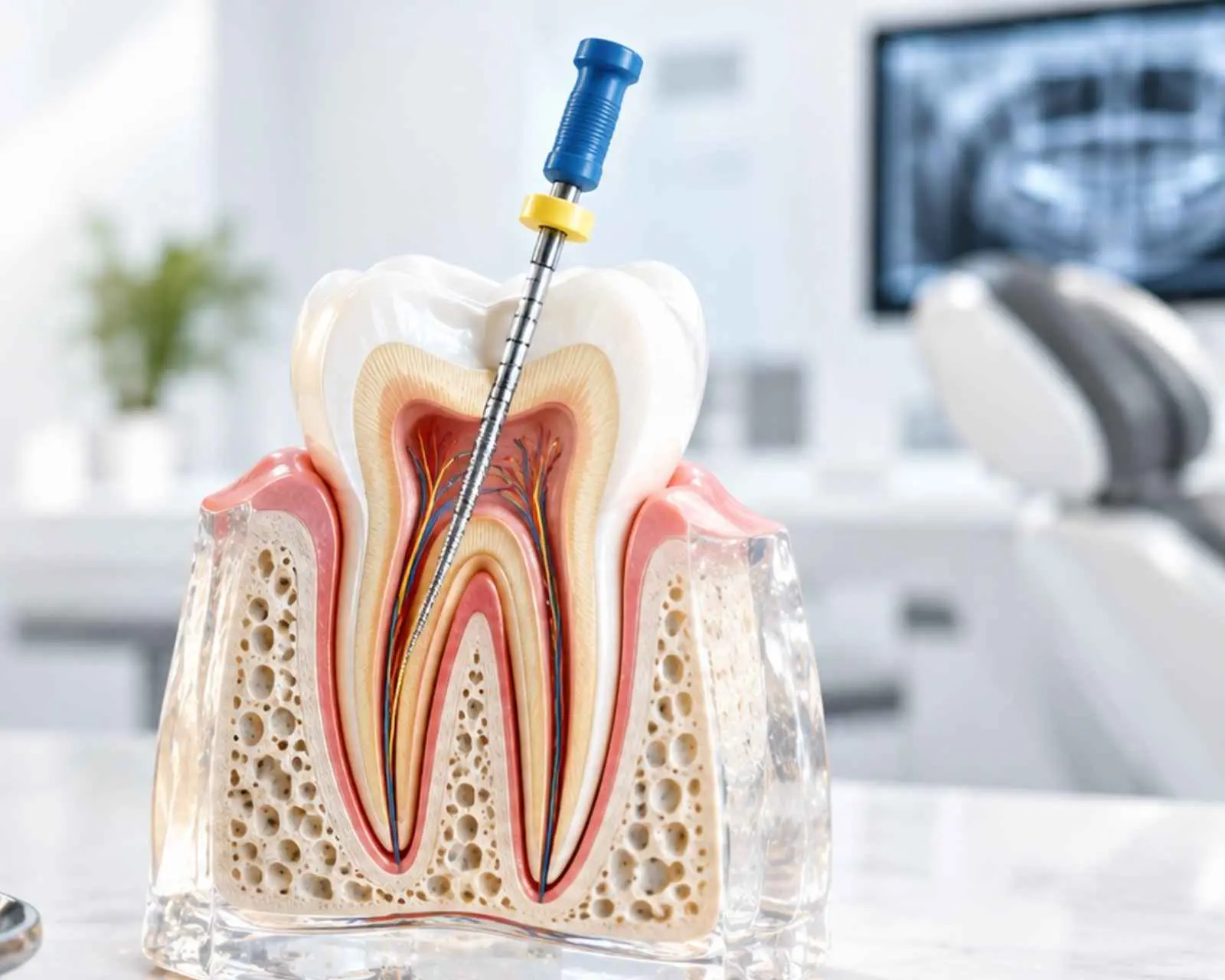
Root canal treatment removes the inflamed or dead nerve from inside the tooth, cleans and disinfects the canals and then fills them, stopping the pain of inflammation and saving the tooth from extraction. It is usually done in one or two sessions, each lasting 30 to 60 minutes under local anesthesia, and the root canal consultant at La Clinica determines the number of sessions after the X-rays.
Before you begin, learn why a molar often needs a crown after root canal treatment, and why endodontists no longer need what is called “devitalizing the nerve”.
session length
in most cases
before treatment begins
root canal consultant
What is root canal treatment?
Root canal treatment, or nerve treatment as most patients call it, is a procedure that cleans the inside of the tooth that contains the nerve and blood vessels when it suffers persistent inflammation or infection. After cleaning, the doctor fills the canals and seals the tooth, so it stays in place and keeps chewing.
What happens inside the tooth during treatment?
- The doctor removes the inflamed or infected nerve from inside the tooth.
- The root canals are cleaned and disinfected with medical solutions to get rid of bacteria.
- The canals are filled with a medical material that prevents infection from returning.
- The tooth is sealed with a filling, then with a crown when needed, so it can chew again.
When do you need root canal treatment?
You need root canal treatment when decay or a fracture reaches the nerve and it becomes inflamed beyond recovery, or when the nerve dies and an infection forms at the root tip. The doctor confirms this by examination and X-rays, because pain alone is not enough for diagnosis.
Nerve inflammation or tooth infection
Deep decay reaches the nerve and inflames it, causing severe pain that may worsen at night or when lying down, and may come with swelling around the tooth.
A deep fracture or crack in the tooth
A fracture that reaches the nerve exposes it to bacteria, so the tooth needs root canal treatment before it is restored.
Sharp pain to cold or hot that lasts after the stimulus is gone
Mild sensitivity that disappears immediately is usually a surface problem, but pain that stays after you swallow the cold or hot drink is a sign of nerve inflammation.
Tooth root abscess
When the nerve dies, bacteria and pus collect at the root tip, and a pimple may appear on the gum or swelling in the face.
Root canal retreatment
If infection returns in a tooth treated before, the doctor reopens the canals, cleans and refills them.
What signs show a tooth needs root canal treatment?
The most common sign is persistent pain in the tooth or pain when biting, but the nerve can sometimes die without pain, which is why X-rays reveal some cases before you feel them. See your dentist if you notice any of these signs:
- Severe, persistent tooth pain, or pain when chewing and biting.
- Pain to hot or cold drinks that stays after you swallow them.
- Swelling in the gum near the tooth.
- The tooth turning a darker shade than the neighboring teeth.
- A pimple or abscess on the gum beside the tooth.
What are the steps of root canal treatment?
Root canal treatment goes through 5 steps, and the session takes 30 to 60 minutes depending on the tooth and the number of its canals, since a molar has more canals than a front tooth.
Examination and diagnosis
The doctor takes digital X-rays of the tooth to determine the size of the inflammation, the shape of the canals and the condition of the bone around the root.
Local anesthesia
The doctor numbs the tooth and the area around it, and makes sure the anesthesia is working before starting.
Removing the nerve and cleaning the canals
The doctor makes a small opening in the surface of the tooth, removes the nerve with fine instruments, then cleans and disinfects the canals.
Filling the root canals
The canals are filled with a medical material that prevents bacteria from leaking in, and the tooth is sealed with a temporary or permanent filling.
Fitting the crown when needed
The crown protects the treated tooth from fracture, and back teeth need it in most cases.
What is the difference between pulpectomy and devitalizing the nerve?
Pulpectomy is removing the nerve under local anesthesia, and it is part of modern root canal treatment. Devitalizing is an old method in which a chemical is placed to kill the nerve over days before it is removed, and endodontists no longer need it with modern anesthesia.
Pulpectomy
The doctor removes the nerve from inside the tooth with fine instruments after the tooth is numbed, then cleans the canals in the same session or a later one.
Devitalizing the nerve
Nerve-killing materials were used when anesthesia was not enough, but some of them harm the gum and the bone around the tooth, so their use has declined greatly. Good local anesthesia today is enough to remove the nerve directly in most cases.
What technologies are used in root canal treatment at La Clinica?
The success of root canal treatment depends on reaching and cleaning every canal, so the doctor uses magnification and imaging tools that reveal what the eye cannot see.
Surgical microscope
It magnifies the field of view inside the tooth, helping the doctor find and clean the fine canals.
Laser
In some cases the doctor uses it as an additional step to disinfect the canals after cleaning them with instruments and solutions.
3D X-rays
They show the number and shape of the canals and the inflammation around the root, and are especially useful in complex cases and retreatment.
Canal filling materials
The canals are filled with a rubbery medical material and a special sealer, then the tooth is sealed tightly so bacteria do not return.
How many sessions does root canal treatment need?
Root canal treatment needs one or two sessions in most cases, and a session takes 30 to 60 minutes. Studies have found no clear difference in success rates between treatment in one session and in more than one, so the doctor chooses according to the tooth’s condition.
One session
When the nerve is inflamed without obvious infection or swelling, and the doctor can clean and dry the canals in the same session.
Two sessions
When there is an infection or abscess, the doctor places a disinfecting material inside the canals between the two sessions, then fills them in the second session.
3 sessions or more
In complex cases, such as curved or narrow canals, or retreatment of a tooth treated before.
How long is recovery after root canal treatment?
Most patients return to their normal day on the day of treatment or the next morning. Mild pain or sensitivity when biting may remain for a few days, then fades gradually.
See the doctor immediately in these cases:
- Pain that increases after the third day and does not ease.
- Swelling in the gum or face.
- The temporary filling falling out.
- A feeling that the tooth is higher than the other teeth when biting.
Who provides root canal treatment at La Clinica?
Root canal treatment at La Clinica is carried out by doctors at the Riyadh and Khobar branches, and the root canal and nerve consultant handles complex cases and retreatment.

Root canal and nerve consultant: Saudi Board, 10 years of experience
Why choose La Clinica for root canal treatment?
You choose La Clinica because root canal treatment there is carried out by a root canal and nerve consultant with a Saudi Board, with a surgical microscope and 3D X-rays that help in complex cases.
Local anesthesia before starting
The doctor makes sure the anesthesia is working before starting, so you are not expected to feel pain during treatment in most cases.
Root canal consultant
Saudi Board and 10 years of experience in complex cases, retreatment and closing incomplete roots.
Precise magnification and imaging
Digital X-rays and the surgical microscope help find and clean all the canals.
Follow-up after treatment
The doctor reviews the tooth at follow-up appointments to make sure the inflammation around the root has healed.
Two branches in Riyadh and Khobar
An appointment at the branch nearest to you.
How do you care for the tooth after root canal treatment?
Care for the treated tooth as you do for your other teeth, with extra caution until it is sealed with the final filling or crown, because before that it is too weak to bear strong biting.
- Do not chew on the treated tooth or eat hard foods on that side until it is permanently sealed.
- Brush your teeth twice a day, and floss daily.
- Do not delay the crown if your doctor advises it: in a study published in the Journal of the American Association of Endodontists, back teeth whose crown was delayed by more than 4 months were about 3 times more likely to be extracted.
- Attend the follow-up appointments the doctor sets.
Why do patients choose La Clinica?
Do you have tooth pain and don’t know whether it needs root canal treatment?
At the consultation the doctor takes an X-ray of the tooth and explains whether it needs root canal treatment, the expected number of sessions, and whether it will need a crown afterward. Appointments are available at the Riyadh and Khobar branches.
Dr. Basel Al-Mutairi answers in video
Short videos in which Dr. Basel Al-Mutairi answers frequently asked questions about root canal treatment.
Frequently asked questions about root canal treatment
Is root canal treatment painful?
Pain is not expected during root canal treatment in most cases, because the doctor numbs the tooth locally and makes sure the anesthesia is working before starting. You may feel mild pain when biting for a few days afterward that fades gradually, and if it increases or swelling appears, see the doctor.
Can the roots of front teeth and back molars be treated?
Yes, the roots of any tooth can be treated, and the difference is the number of canals: a front tooth usually has one canal, and a molar has 3 to 4. That is why treating a molar takes longer and may need an extra session.
When do I need a crown after root canal treatment?
A molar or premolar often needs a crown after root canal treatment, because the treated tooth is weaker and bears great chewing pressure. A front tooth may need only a filling if most of it remains healthy, and the doctor decides this according to what remains of the tooth.
Does root canal treatment always succeed?
Root canal treatment succeeds in most cases, and a recent comparative study found a success rate above 85% after a year, whether the treatment was done in one session or more. If infection returns in the tooth later, it can often be retreated before considering extraction.
When should I see the dentist after treatment?
See your dentist within one to two weeks after treatment, then at the regular appointments the doctor sets. See them immediately if swelling appears, if pain increases after it had been easing, or if the temporary filling falls out.
Where to start?
If you have tooth pain or gum swelling, do not wait until the inflammation turns into an abscess, because early treatment is simpler and one session may be enough. Start with an examination and X-ray at the Riyadh or Khobar branch.
Call or WhatsApp: Riyadh branch +966 53 657 0591 · Khobar branch +966 50 707 0593